
Creative Strategies for Aspiring Homeowners
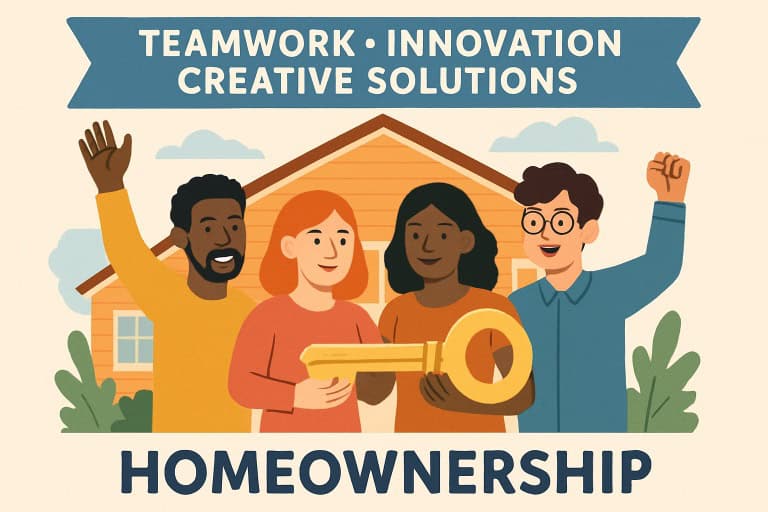
Embarking on homeownership can be exciting yet daunting, especially in today’s shifting market. Innovative strategies are making this more attainable for those willing to look beyond traditional methods. Working with specialists helps navigate the competitive housing market. Embracing creative approaches can be key to securing a home.
Rising prices, inflation, and lending changes prompt buyers to rethink possibilities.
Flexibility, resourcefulness, and teamwork are now vital for homebuyers. While conventional financing works for some, inventive solutions expand access and opportunities.
Various paths suit different financial situations and lifestyles, like sharing costs or leveraging technology to save. Understanding these options is crucial to making them work for you. Let’s explore the most effective strategies for aspiring homeowners.
Co-Buying with Friends or Family
As home prices climb, pooling financial resources can be a practical path to homeownership. Co-buying with friends or family allows multiple individuals to combine their savings and borrowing power to purchase a home that might otherwise be out of reach. Working with an experienced professional like a Honolulu real estate agent Kina Knisley can help co-buyers navigate the legal, financial, and logistical details of joint ownership more smoothly.
The key to successful co-ownership is transparency: establishing clear legal agreements that specify every party’s share, responsibilities, and exit plan ensures both harmony and long-term viability. This trend is especially popular in high-cost urban centers and can help buyers enter competitive markets faster.
House Hacking
House hacking is gaining attention among younger buyers and real estate investors. This strategy involves purchasing a home with multiple units—or even a single-family home with rentable spaces—and living in one part while leasing the other(s).
Rental income from tenants can significantly offset monthly mortgage payments, property taxes, and maintenance costs, turning the home itself into a partial income-generating asset. Not only does house hacking pave the way to financial flexibility, but it can also serve as a launchpad for future real estate investments.
Exploring Alternative Financing Options
Not every journey to homeownership starts with a traditional mortgage. Across the country, buyers are discovering creative financing options tailored to a broader spectrum of financial backgrounds.
Rent-to-own agreements let buyers lock in a future purchase while living as tenants, gradually building equity. Shared equity arrangements—often sponsored by nonprofits or local governments—allow buyers to split the cost and benefits of home appreciation.
Community land trusts maintain affordable housing by separating the land from the building, offering affordable leaseholds rather than outright ownership. Researching and comparing these options can unearth the best fit for unconventional financial circumstances.
Investing in Fixer-Uppers
Homes in need of renovation typically come at a reduced price, attracting buyers who are willing to put in sweat equity for long-term gain. By purchasing a fixer-upper, buyers have the chance to customize renovations to suit their style while increasing the home’s overall value.
This method involves careful budgeting, realistic timelines, and often a little DIY spirit or professional contracting help. Nonetheless, the end result can be significant equity growth and lower purchase costs compared to move-in-ready homes.
Relocating to Affordable Markets
With remote work gaining traction, moving to more affordable regions can make buying a home more manageable. Cities and towns outside major metropolitan hubs often feature lower real estate prices, reduced property taxes, and better overall affordability.
Many buyers are leaving high-cost markets like San Francisco and New York for growing cities in the Midwest, the South, or even abroad. This approach can be particularly appealing to digital nomads, telecommuters, and retirees who have the flexibility to work from various locations.
Leveraging Technology and Crowdfunding
Digital innovations are opening new avenues for building a down payment fund. Round-up savings apps automate the process, funneling spare change into dedicated accounts until it’s time to purchase.
Meanwhile, crowdfunding platforms provide prospective buyers with a way to rally support from friends, family, and even the general public—transforming small contributions into significant stepping stones for a down payment or renovation project. These tech solutions can make saving less burdensome, bringing aspiring homeowners closer to their goals.
Prioritizing Sustainability and Minimalism
For many buyers, less is more. Embracing minimalist living by opting for tiny homes, modular units, or energy-efficient builds can dramatically decrease both upfront costs and ongoing utility bills. Eco-friendly designs and sustainable materials also appeal to environmentally conscious buyers who want to limit their ecological footprint while saving money.
Reducing excess space not only makes homeownership affordable but also fosters a more intentional, clutter-free lifestyle.
Conclusion
Homeownership is an ever-evolving goal that calls for flexibility, innovation, and perseverance. By considering unconventional strategies—such as co-buying, house hacking, creative financing, or relocating—buyers can overcome obstacles and find a solution that aligns with their vision, needs, and finances.
Exploring all available options ensures that the path to owning a home is accessible to a broader range of individuals, helping dreams take root in any market.
