
How to Maintain a Healthy Home Plumbing System
Regular plumbing maintenance leads to fewer breakdowns, water waste, and consistent comfort. Adopting simple practices like inspections, drain care, and mindful water usage ensures a robust, well-functioning home plumbing network.
Maintaining a healthy plumbing system is crucial for a safe, comfortable, and functional living environment. Simple maintenance practices prevent structural damage, health hazards, and costly disasters.
For those who want the reassurance of professional oversight, the experts at Denver Sewer and Water are always ready to provide trusted advice, thorough inspections, and reliable repairs.
By taking a proactive approach, you extend the lifespan of your system, enjoy greater peace of mind, and minimize the risk of emergency repairs that disrupt your household routine.
Regular Inspections
Regularly inspecting your plumbing system can help detect hidden problems and prevent costly repairs. Visual inspections under sinks, behind toilets, and around appliances can reveal early warning signs of moisture, water stains, mildew, or mold.
Professionals can conduct thorough evaluations using specialized equipment to identify hidden issues, ensuring small issues are resolved promptly.
Proper Drain Care
Drains are crucial in plumbing systems and can be clogged by grease, oils, food scraps, and non-dissolvable materials. Use disposable containers, place mesh strainers, and clean filters regularly to prevent clogs. Professional drain cleaning is recommended for ongoing issues or recurring blockages. Safe, effective drain care can prevent costly emergency services and inconveniences.
Protecting Pipes from Freezing
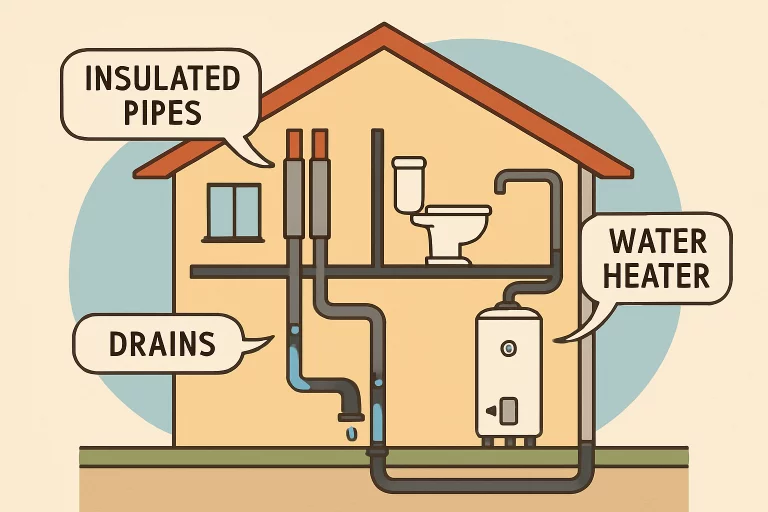
Frozen pipes pose a significant threat to your plumbing system during cold months. To prevent damage, insulate pipes in vulnerable areas, let indoor faucets drip during extreme weather, and set your thermostat at 55°F. Open cabinet doors under sinks to circulate warmer air. These preventive measures ensure your plumbing system remains reliable and safe during cold weather.
Maintaining Water Pressure
High water pressure can damage pipes, joints, and household fixtures, leading to premature wear and leaks. Test pressure using a gauge between 40 and 80 psi, and consider a pressure-reducing valve if it is above 80 psi. Monitoring and controlling water pressure prolongs the lifespan of plumbing infrastructure and ensures the safe, reliable operation of water-using appliances.
Water Heater Maintenance
Regular inspection and testing of your water heater are crucial for its efficiency and lifespan. Over time, sediment from minerals can build up, affecting performance and energy costs. Regular draining and flushing of the tank and checking for leaks, rust, or strange noises are essential maintenance steps.
Being Mindful of Water Usage
Adopting water-saving habits can lower utility bills, reduce environmental impact, and reduce plumbing system demand. Fix leaks, turn off taps, shorten showers, run full-load appliances, and upgrade to modern, low-flow fixtures. This conscious water usage protects the local water supply and ensures home plumbing longevity.
Responding Promptly to Issues
Addressing minor plumbing issues early can prevent major problems like water damage, mold growth, or system failure. Seek professional help for evaluations, as early intervention is less expensive than emergency repairs. This ensures a safe, clean, and stress-free home.
Conclusion
Maintaining your home’s plumbing system is an investment that pays off in long-term savings, comfort, and security. By embracing regular maintenance, thorough inspections, and efficient water usage, you ensure your plumbing remains efficient and reliable year-round.
Don’t wait for emergencies—partner with reputable specialists for expert advice and preventive care. With these proactive habits and resources by your side, your home will enjoy a healthy, smooth-running plumbing system for years to come.
