
Safe Electrical Installation Practices for Modern Homes
Modern homes depend on complex electrical systems for comfort, technology, and efficiency. Ensuring every aspect of these systems is safely installed and maintained protects your family and property while reducing the risk of costly repairs.
These systems’ evolution calls for rigorous attention to detail and expert guidance during electrical installation, ensuring all modern standards are met and exceeded. With every new technology or gadget added, the importance of proper wiring, circuit protection, and updated panels only grows.
Neglecting current safety codes and best practices can dramatically increase the risks of electric shock, fires, or equipment failure. That’s why it’s so important to educate homeowners on safe installation procedures. A safe electrical system improves not just safety but also the daily function and efficiency of your living environment.
Regularly evaluating your home’s electrical infrastructure, from the big panels to the tiniest outlet, helps avoid hidden dangers. Whether moving into a new build or updating an older house, the proper practices set the foundation for safety and peace of mind.
Beyond your home’s foundation, accessing reliable electrical services guarantees you’ll have the support you need for routine checks and urgent upgrades, ensuring your systems meet today’s safety challenges.
Understanding the National Electrical Code (NEC)
The National Electrical Code (NEC), published by the National Fire Protection Association (NFPA), is the cornerstone for electrical safety in the United States.
It provides standardized requirements for electrical design, installation, and inspection to mitigate risks of electrical fires, shocks, and failures. While not a federal law, the NEC is the backbone for most local regulations, so its adherence is more than a best practice—it’s often a legal requirement.
Updated every three years, the NEC reflects technological advancements and increased demand for residential systems. Homeowners should verify that all work aligns with the latest version to ensure modern device and appliance compatibility.
Following the NEC prepares your home’s electrical system for the future and demonstrates a commitment to the highest safety standards. Additional guidance on NEC requirements can be found in official resources like the NFPA’s NEC overview.
Regular Inspections and Upgrades
Time, increased power demands, and aging infrastructure can weaken even the best-designed electrical systems. An outdated or overloaded system is more than an inconvenience—it may be a serious hazard.
Scheduling periodic inspections with certified electricians can uncover hidden problems such as frayed wiring, loose connections, or unsafe modifications. This proactive approach is crucial for preventing incidents before they occur.
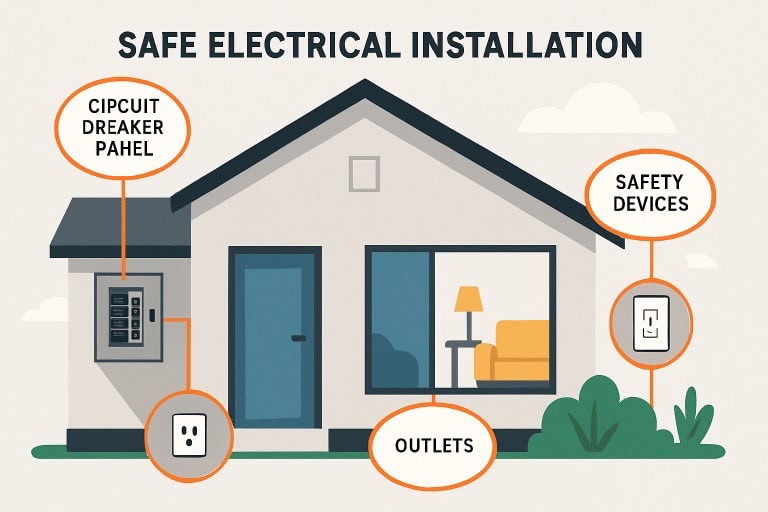
Electrical panels should be a priority, especially in older homes. Original panels, frequently rated for 60-100 amps, may not handle the needs of appliances like HVAC systems, modern kitchen appliances, or electric vehicle charging stations. Upgrading to a 200-amp panel or higher improves safety, reliability, and functionality, protecting your family and investment.
Incorporating Modern Safety Devices
Contemporary safety devices are now essential for any new or upgraded residential system. Ground Fault Circuit Interrupters (GFCIs) monitor the flow of electricity and can stop power in milliseconds when an imbalance occurs—vital for wet areas like bathrooms, kitchens, garages, and outdoors. Similarly, Arc Fault Circuit Interrupters (AFCIs) detect hazardous arc faults, a common culprit in home fires, and interrupt power before a fire can start.
Building codes increasingly require these protective devices throughout the home. Their installation in the right locations—such as bedrooms, laundry rooms, and other living spaces—ensures a far lower risk of accidental electrocution or fire. GFCIs and AFCIs are affordable, easy to test, and dramatically improve residential safety with minimal investment.
Professional Installation and Maintenance
Attempting DIY fixes or installations may seem cost-effective, but without professional knowledge, there’s a serious risk of code violations, improper wiring, or dangerous connections. Licensed electricians bring expertise and specialized tools and stay updated on evolving codes and technologies. Their work includes everything from safe initial installs to advice on better energy management and smart home integration.
Routine professional maintenance is just as essential as installation. These checks catch minor faults before they become emergencies, offering recommendations for improvements or updates as technologies change. Professionals will also ensure your home’s wiring supports new energy-efficient upgrades and innovative technology. For general safety recommendations, the U.S. Consumer Product Safety Commission offers guidance on electrical safety at home.
Energy Efficiency and Smart Home Integration
Modern homes increasingly rely on energy-efficient fixtures and advanced technology for convenience and cost savings. Installing LED lighting, programmable thermostats, and smart outlets can significantly reduce your electricity bill and environmental impact. However, the integration of these systems must be handled correctly—compatible wiring, adequate circuit capacity, and secure connections are vital.
Smart home devices like automated lighting, voice-controlled appliances, and remote security systems depend on seamless electrical integration. Careful planning and professional input ensure these technologies enhance daily living without compromising safety. Furthermore, these upgrades add long-term value to your property.
Conclusion
Prioritizing safe electrical installation practices is fundamental to household well-being. Following the NEC, making timely upgrades, embracing safety devices, and securing expert support all contribute to a robust and efficient electrical system, ready for the demands of modern living. Staying proactive and informed ensures every corner of your home remains secure, efficient, and future-ready.
